
Kirra Design
Browser-Based 3D Blast & Mine Design
Create blast patterns with configurable burden, spacing, hole angles, and sub-drill. Pattern templates for common layouts.
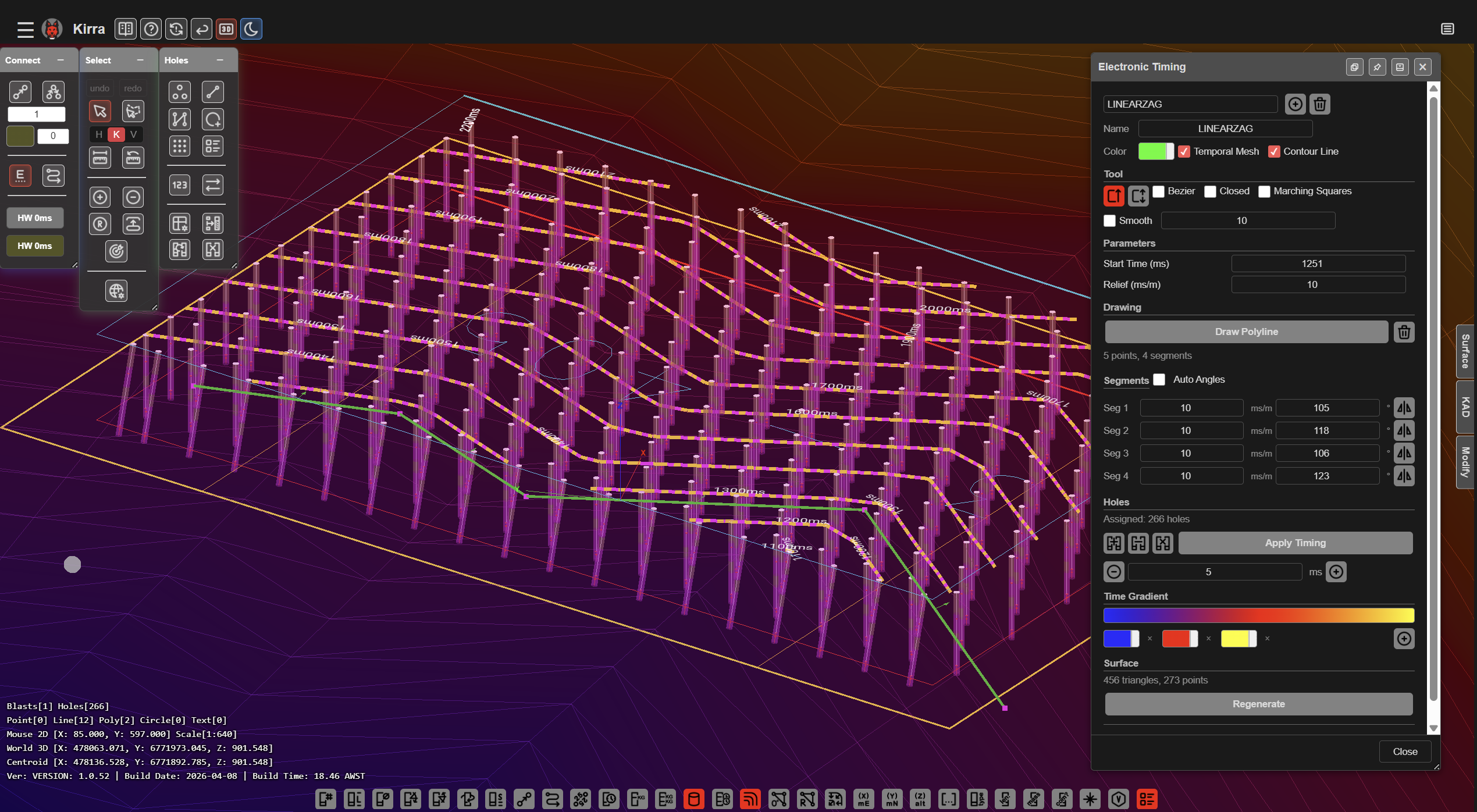
Visual tie-in editor with delay assignment. Surface and in-hole delay support. Real-time timing contours.
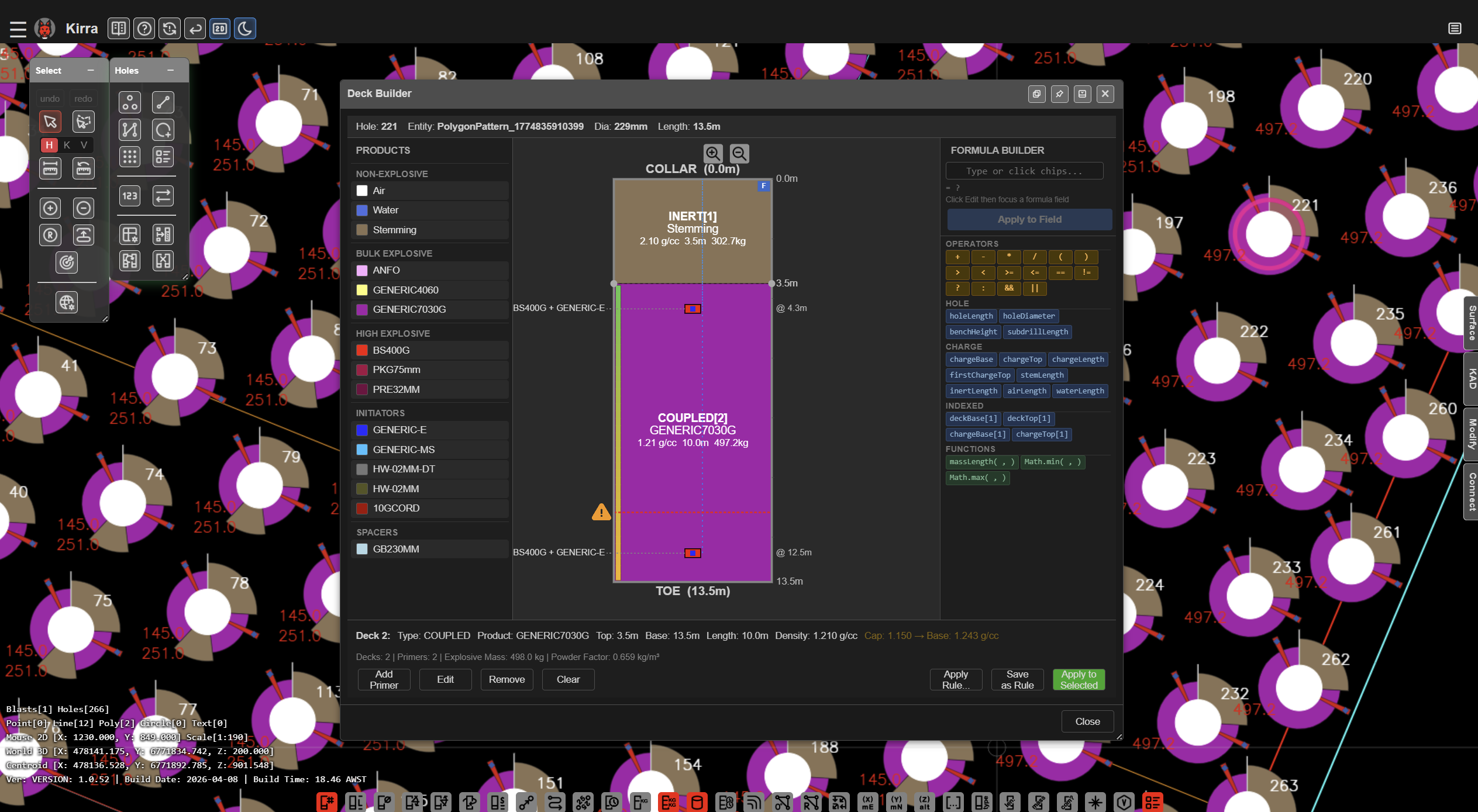
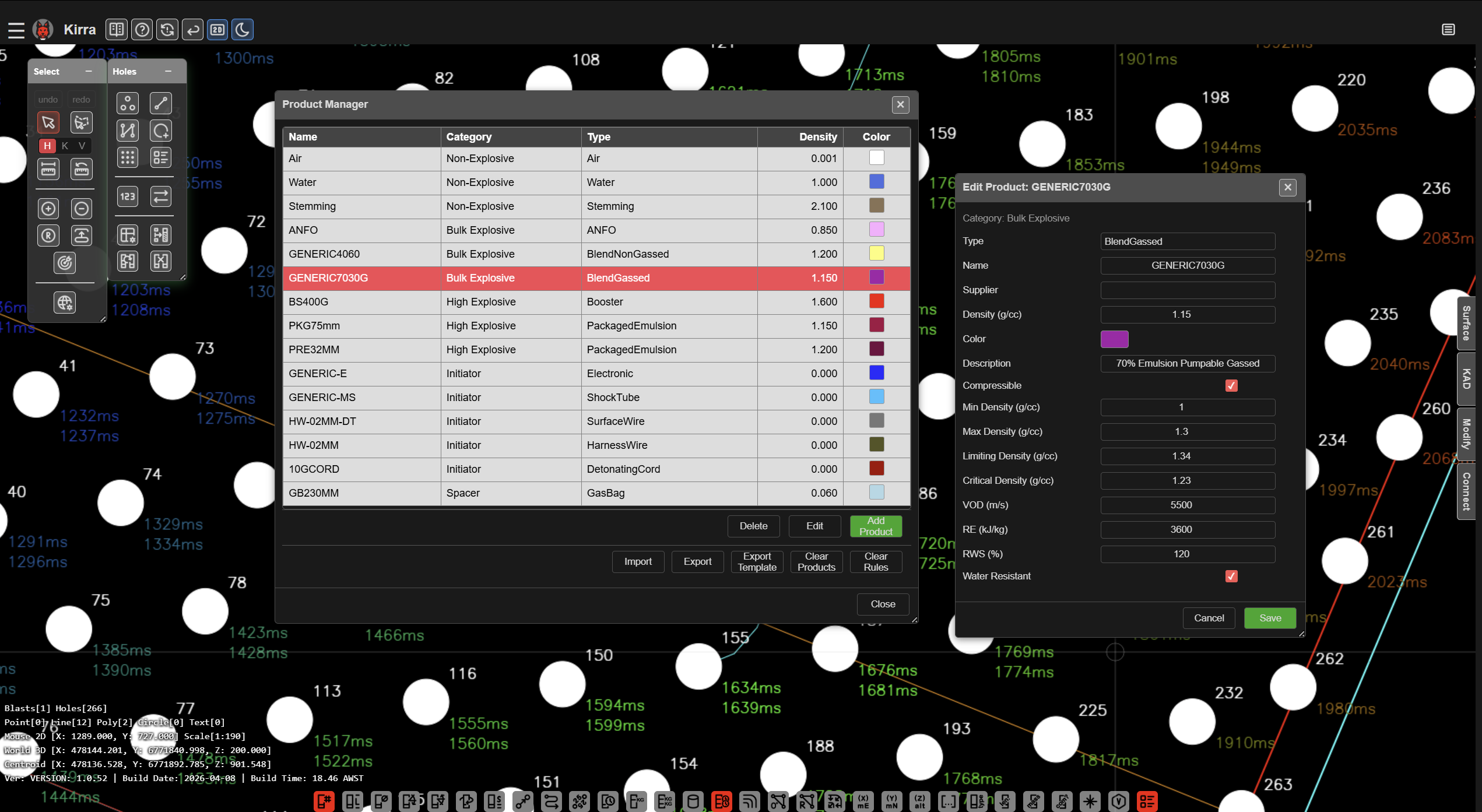
Multi-deck charge designs with stemming, air decks, and product selection. Automatic mass and volume calculations.
GPU shader-powered PPV prediction, damage contours, and borehole pressure analysis at interactive frame rates.
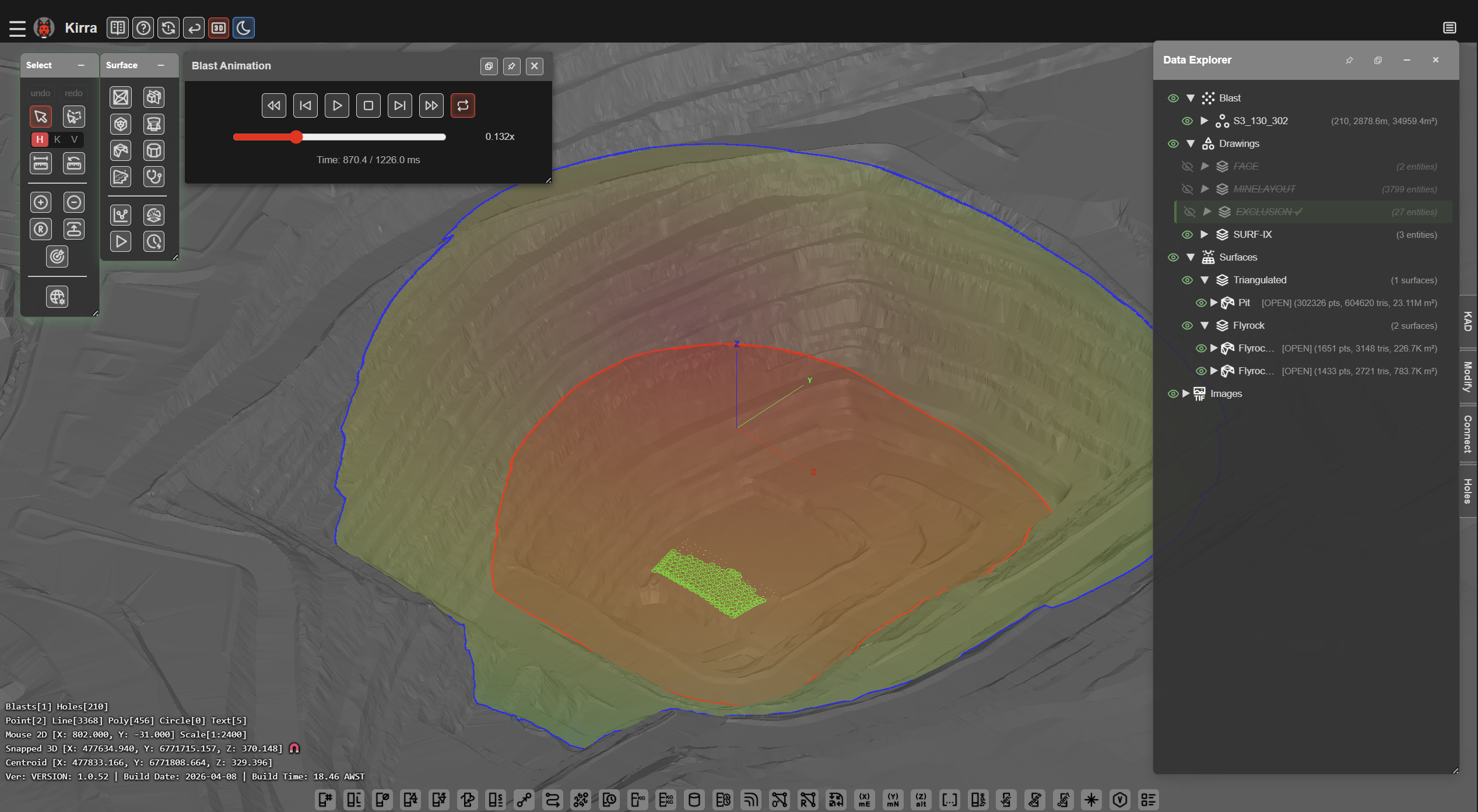
Three.js powered 3D scene with surfaces, holes, and annotations. Dark and light themes. 2D/3D toggle.
Import and export CSV, KAP, Surpac STR/DTM, Shapefile, LAS, AQM, SPF, CBLAST, and more.
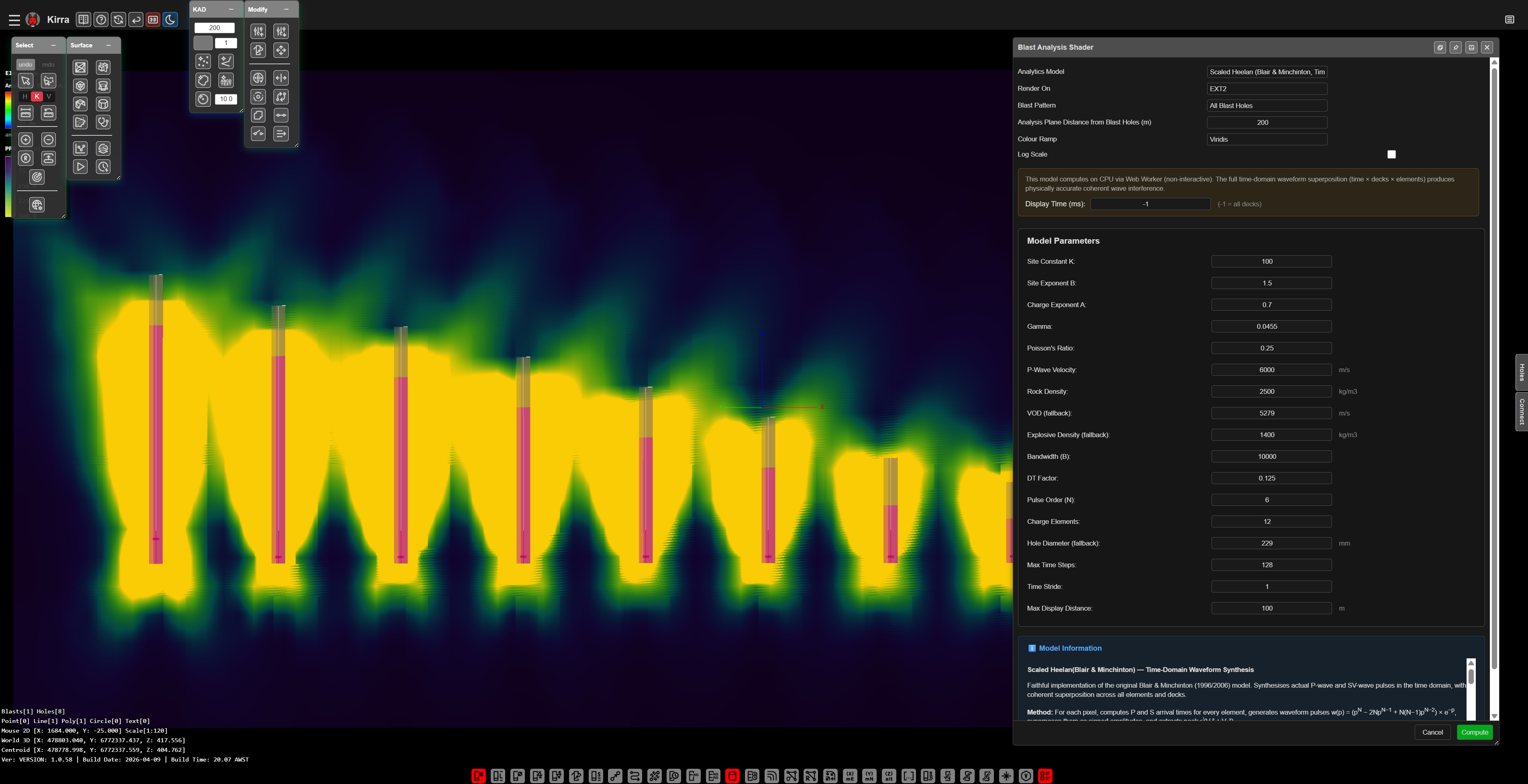
Time-domain PPV prediction. "Blair Lite" as a GPU fragment shader for real-time display. "Blair Heavy" on CPU with row-level checkpointing.
Damage contours computed from vibration models. Visualise damage zones per hole and across the pattern.
Chapman-Jouguet detonation pressure with decoupled charge coupling ratio corrections. DataTexture GPU packing.
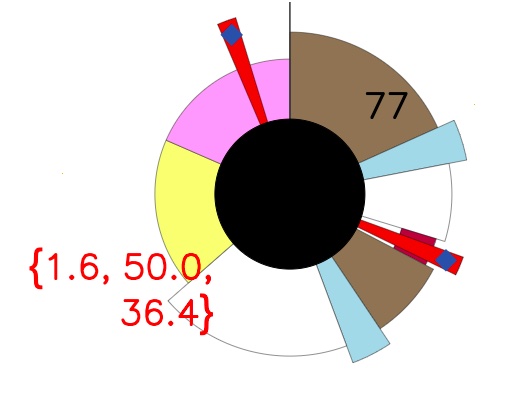
Unique per-hole cross-section — instantly see decks, stemming, air gaps, and product fills at a glance.
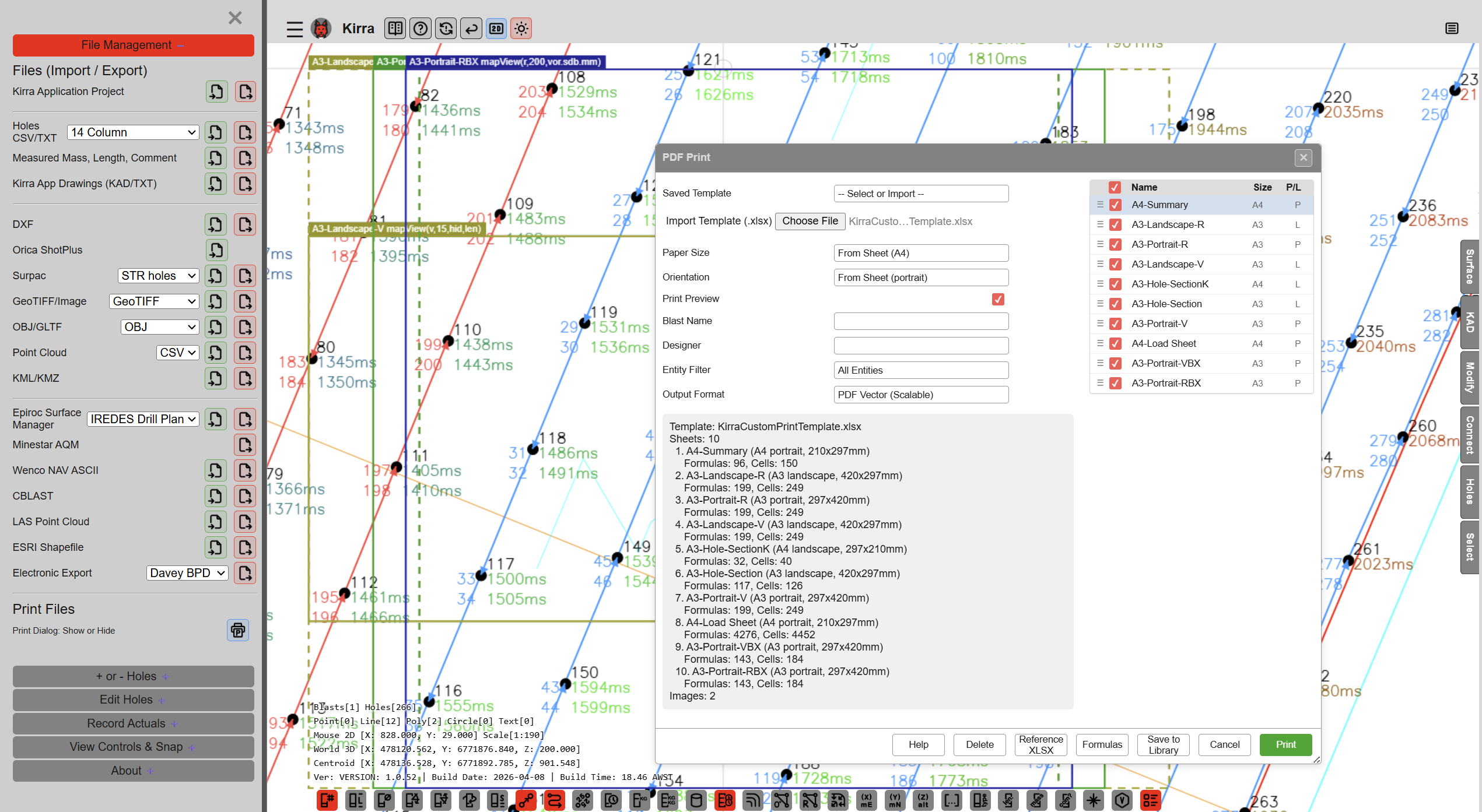
Continuously expanding file format support — from drill & blast systems to mine planning packages — so Kirra can read and write data from any workflow.
Import and visualise block models for ore grade context, enabling blast designs informed by geology directly within the 3D scene.
Maturing the trimesh-boolean library for robust open-mesh CSG — surface intersections, pit design cut-fills, and reliable boolean operations.
Refining the user interface, streamlining workflows, and hardening stability across large datasets and edge cases.